
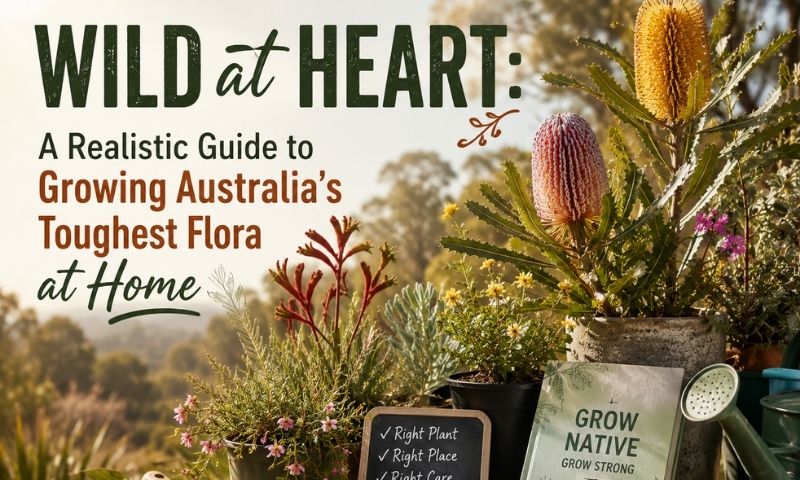
Every August, National Science Week turns the spotlight on something most of us walk past without a second look –the native plants growing wild along the highway, in the bush, in a neighbour’s front yard. This year’s theme, “Seeds of Science,” couldn’t be a better excuse to actually get your hands dirty rather than just admire things from a distance. Fittingly, one of the week’s most popular public polls asks Australians to vote for their favorite wildflower, which is as good a reason as any to actually try growing one yourself.
Here’s the thing nobody tells beginners during National Science Week or any other week: growing native plants isn’t automatically easier than growing anything else across Australia. It’s just different.
Every Wildflower Is Different
Every wildflower needs different type of soil and nutrition & different amount of water as well. Even within the same genus, a wildflower from one corner of the country can have wildly different needs to its cousin two states over. A plant bred for the deep sand of Western Australia has completely different needs to a wildflower suited to Sydney’s clay-heavy soil, and treating them identically is a recipe for a dead garden bed.
Horticulturists who breed these plants for a living put it simply: start with the tougher, more adaptable species before attempting anything fussy. Kangaroo paws are a good example -the original wild form only thrives in its home patch of southern WA, but decades of breeding have produced hybrid cultivars that cope with a much wider range of soils and rainfall. A bred cultivar is a far safer bet for a first attempt than the pure wild species.
Know the Climate Zone of your Native Plant
Australia is enormous, not just in area but also with respect to climate. Gardeners in tropical Queensland and gardeners in temperate parts of southern Australia are effectively working with a different continent’s worth of Australian native plants. A plant built for the desert interior wants almost nothing to do with a humid coastal garden, and vice versa. Before buying anything, it pays to check the region a species originates from and match that against your own backyard conditions rather than your own preferences.
Some Australian native plants are genuine generalists that grow almost anywhere. Every plant have different tolerance level. Plants like Basket grass are a lot less fussy, but there are also many which need a lot of care like Orchids found on the continent. Know what you are dealing with.
Myths & Misconception
There’s a persistent myth that native plants never need watering. It’s not true. Even genuinely drought-tolerant Australian native plants need regular water while they’re establishing -nursery-raised seedlings are used to generous watering, and weaning them off too fast just stresses the roots. Once established, tapering back works, but “no water ever” only applies if you’ve chosen species that naturally match your local rainfall.
Some seeds go further and need fire, or at least the chemical signal fire leaves behind. Certain wildflowers, including some flannel flower varieties, germinate best after smoke exposure -a trait shaped by millions of years of bushfire cycles. The good news is you don’t need to set anything alight yourself; most nursery-bought seed is already pre-treated with smoke water, so the hard part’s done.
Pruning matters too. The general rule is to trim straight after flowering finishes, taking off up to a third of the growth. Cutting back into bare, leafless wood is the one thing to avoid, since many natives won’t regrow from it.
Feeding Natives without Accidentally Poisoning Them
This is where things get genuinely counterintuitive. Plants in the Proteaceae family -banksias, grevilleas, hakeas -are so efficient at absorbing phosphorous that a standard garden fertilizer can actually be toxic to them. Stick to a low-phosphorous native blend instead, and that same mix is safe to use across the rest of your native garden too. Potted natives are their own case, since they’re cut off from the natural soil ecosystem entirely.
Start Small, Ask Locally
None of this needs to be intimidating. Most reputable native nurseries -as opposed to the general chain stores -employ staff that genuinely know their stock and can steer you toward whatever suits your soil and rainfall. Plants that are growing in your surrounding are the most optimal ones for a beginner. This is because every person can gather info about their local soil profile and other aspects.