
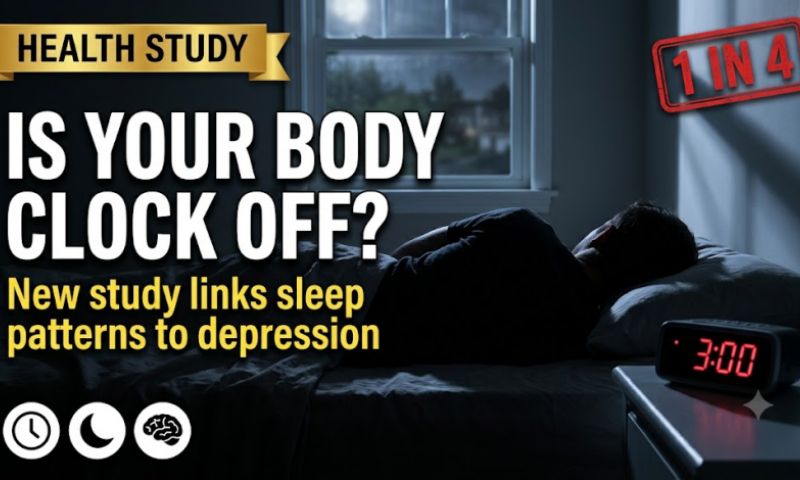
Wake up exhausted? Stay up way too late? Sleep in on weekends like it’s your job?
Bad habits, maybe. Or, for some with depression, not habits at all. A big Aussie study reckons there could be a whole separate type. One tied to the body clock.
They’re calling it circadian depression.
One in four
Researchers at the University of Sydney’s Brain and Mind Centre looked at data from 11,380 Australians, the ABC reports. All of them have severe, long-lasting or recurring depression.
Of those, 2,604 ticked the boxes for circadian depression. That’s about one in four.
It’s out in The British Journal of Psychiatry. Most of the people in that group were women.
What’s a body clock, again?
It’s your built-in 24-hour timer. Sleep. Wake. Plus heaps more.
“It isn’t just sleep, it’s not just about sleeping better,” said Professor Ian Hickie, co-director of the Brain and Mind Centre. The body clock affects mood, metabolism and more, he says.
The six signs
To make the cut, people had to report at least three of six things.
Waking up really tired is one. Being a night owl is another. So is feeling worse at certain times of year.
The others? Going to bed later. Sleeping more when depressed. And “social jet lag”, which is when your sleep times on workdays and days off are wildly different.
Sound like half of Australia? That’s partly the point the experts make. More on that below.
Different, and maybe harder to treat
People in the circadian group tended to get depression younger, and had more severe symptoms. Their illness was often more complicated, too.
They also seemed to have a different genetic profile. That included a higher genetic risk of ADHD.
Here’s the big one. They may not respond as well to regular antidepressants. But that comes from people reporting it themselves, so it still needs proper testing.
“Depression is not a uniform illness,” said lead researcher Dr Emiliana Tonini.
Could light help?
Maybe. Different treatments might suit this group better, the researchers reckon.
Things like melatonin, antidepressants that work on melatonin, light therapy and changes to daily routine. The hope is people get the right treatment sooner.
Not everyone’s convinced yet
Other experts say slow down a bit.
Take UNSW’s Professor Philip Mitchell. He had no part in the study. “At the moment it’s not reaching the bar where this could enter clinical practice,” he said. He wants more research, including studies overseas. He also says it overlaps with another type, atypical depression.
Bad sleep can cause the exact same signs, says Professor Shanthakumar Wilson Rajaratnam from Monash. It’s not always the body clock.
Both agree on one thing, though. It’s worth doctors asking patients with depression about their sleep and daily rhythms. As an extra, not a replacement for normal treatment.
Sound like you?
Don’t self-diagnose off one news story, though. Talk to your GP. Mention your sleep patterns, the tiredness, the late nights. It’s useful information for them.
And don’t stop or change any medication without talking to a doctor first.
Next up
Do regular antidepressants really work worse here? Do body-clock treatments work better? That’s what the team tests next.
Get it right, and a lot of Aussies could get better care.
Doing it tough, or worried about a mate? Lifeline’s there on 13 11 14. Beyond Blue too, on 1300 22 4636.