
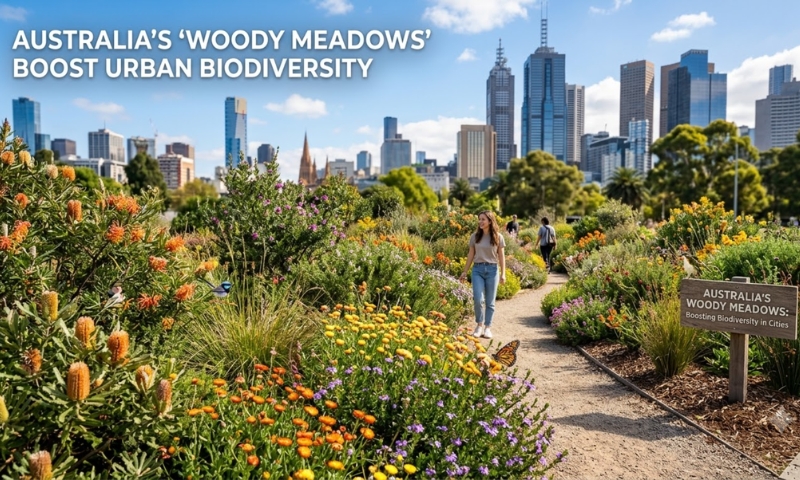
Every couple of years, someone rings Greater Dandenong Council convinced the woody meadow has been vandalized. Patrol staff explains, again, that nothing has died -the tangle of native shrubs that used to fill a garden bed has simply been cut back almost to the dirt, on purpose, as part of a planting style now spreading across the country.
The woody meadow despite looking brutal for a few months, is turning out to be one of the more successful ideas for building biodiversity into Australian urban greening in years.
What Exactly Is a Woody Meadow?
A woody meadow contains 10 to 25 native species per site and is densely layered, rather than the few hardy shrubs that can be found in a typical park bed. It started about 10 years ago when the University of Melbourne and the University of Sheffield decided to work together to find a way to answer a relatively mundane and costly question: Councils wanted to plant with colour, and not much upkeep, but most of the cheap options became weedy and lifeless within a few years.
Over a thousand varieties of Australian shrubs were tested – from grevillea to bottlebrush, eucalyptus and many more – and only those that would do well when planted closely and periodically hacked by the back of the hoe were selected. This hard cut, called coppicing, occurs every 2-4 years, and is similar to the effect that bushfire has on native ecosystems.
From Melbourne Pilot Plots to a National Movement
The first trial sites went in around Melbourne in 2015, including a well-known planting at Birrarung Marr in the city centre, monitored closely by the University of Melbourne’s research team as the plots matured. A decade on, the concept has expanded well beyond that original pilot: there are now more than 30,000 square metres of these plantings spread across around 59 locations in southern Australia, tied into everything from level-crossing removal projects in Melbourne to metro rail works in Sydney and a redevelopment in Perth. Dandenong was one of the earlier councils to take up the idea outside the inner city, planting its first sites at Burden Park, Ross Reserve and along the Princes Highway in 2021.
Researchers at the University of Melbourne say the appeal for councils isn’t just aesthetic, or even just about biodiversity. Their analysis found these plantings need roughly three-quarters less ongoing maintenance than comparable low-diversity plantings, since there’s far less weeding, pruning and rubbish removal required once the meadow is established. For a council with a tight parks budget, that’s often the deciding factor over which planting style gets approved.
Why More Flowers Means More Biodiversity
The ecological case here is where the research gets more interesting. Packing that many species into one small footprint doesn’t just look better -it creates habitat and food sources that a mown lawn or a single row of shrubs simply can’t offer. Native bees, birds and other pollinators tend to show up in far greater numbers wherever these dense, flowering patches appear, which matters more than people might assume given how many threatened plant and animal species now rely on habitat inside city limits rather than in untouched bush land.
That’s part of why researchers describe cities as unlikely hotspots worth protecting rather than lost causes for nature.
Getting a Woody Meadow Started Near You
The University of Melbourne’s project team has since released free public guidelines covering species selection, site preparation, ongoing coppicing schedules and rough maintenance costs, aimed at anyone from local councils to home gardeners who want to try their own small-scale contribution to urban biodiversity. Residents simply asking for one thing- local government should respond, when enough people in a neighborhood put their hand up and request a change to how a patch of public land is planted.
Councils have committed the trade-off -a few unsightly months of bare stems every couple of years in exchange for a genuine biodiversity. A low-cost landscape -has proven to be one plenty of communities are willing to accept once they understand what’s actually happening. Dandenong’s next scheduled coppice is due in 2026, and if past experience -and the University of Melbourne’s decade of data -is any guide, the council can expect the same anxious phone calls, followed by the same result: a fuller, more colorful meadow than the one that was cut back.