
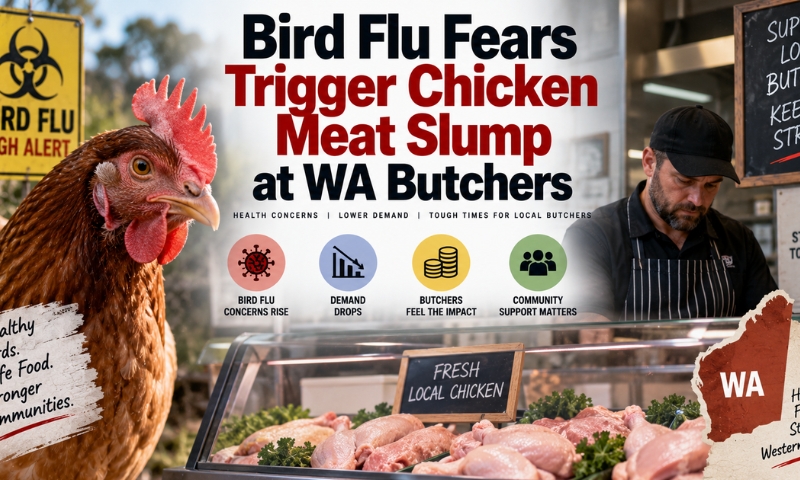
Avian influenza is affecting places in Australia and New Zealand on new fronts, and this time it has hit the butcher shop. Something odd is happening on the shop floor of several Perth butchers: a product that has sat rock-solid on the sales chart for years is suddenly slipping, and shopkeepers say the reason has nothing to do with price or supply. It comes down to nerves about the virus circulating through parts of WA and the eastern states, even though the risk to people eating cooked chicken meat remains as low as ever.
Perth Butchers See Chicken Sales Plunge Amid Public Anxiety
One Mt Hawthorn butcher says chicken, usually his most dependable line, has dropped by roughly 20 to 25 per cent over the past five or six weeks. Another operator running a shop in Wattle Grove described an even steeper fall, with chicken sales down about 60 per cent in just three weeks.
He had to throw many unsold boxes of chicken for the first time in a long while. In the days of normal demand the restocks were daily job, but now things have changed. He further said that he barely reordered the cut. There is nothing wrong with the meat, but people are anxious due to the virus spreading in WA.
Is Bird Flu Actually a Threat in WA Right Now?
The nervousness comes despite WA’s outbreak having gone quiet for over a month. The state recorded Australia’s first confirmed detections of the H5N1 strain in a migratory seabird back in June, and authorities say they have been working closely with wildlife groups to track and report new cases since.
The state’s Deputy Premier confirmed there had been no fresh detections in WA for more than four weeks, even as the picture elsewhere in the country continued to shift. Food safety regulators have been equally clear that properly cooked chicken and eggs remain safe to eat, stating there is no evidence of infection within Australian poultry or the wider agriculture industry, and that the virus is not known to spread to humans through food.
Bird Flu: H5N1 is not H5N1, but rather a hybrid bird-flu virus
Wildlife authorities are rightly concerned about the strain, which is officially designated as H5, a strain of bird flu of the H5N1 type that has been found in seabirds and, more recently, in a few marine mammals. More than 300 positive wildlife sightings have been reported with the virus in at least dozens of species since the first WA case.
It is a variety different from the variant that infected commercial farms in New South Wales, Victoria and the ACT about two years ago, forcing egg producers to butcher about two million birds and leading to a prolonged national shortage of eggs. But that previous incident was one of the reasons that when the latest H5 bird flu case hits the headlines in Australia, people have a tendency to store up memories, especially when they are being fed the almost opposite message to the prior one, as seems to be the case this time around.
The demand for backyard chickens is growing as the worries of bird flu do as well
A chicken shortage is the opposite problem to the one that shopkeepers are experiencing as their chickens are sold out, and poultry breeders throughout WA are experiencing. This is similar to the pandemic and previous H7 outbreak, when industry believed this was due to households preparing for potential shortage if the virus was to make its way to commercial flocks, according to industry figures.
How Australia’s Butchers and Farmers are Watching Next
For Australia, for now, the situation is being closely watched with a vaccination trial to safeguard vulnerable native species. The South Australian case in a fur seal reported earlier this month was the first time the virus has been identified in a mammal, officials said, but the development was not completely unexpected, after the outbreak has developed as it has.
Butchers in Perth, on the other hand, are merely hoping that people will have their sense of trust restored when everyone gets a better handle on how little actual danger cooked chicken offers and that the downturn is more about fear than fact. Shelves remain filled and freezer shelves remain loaded until they can once again be confident in the product they love for their dinner. Rebuilding that confidence may just take time, patience and some quiet weeks in an industry that has its own process of habit and routine.