
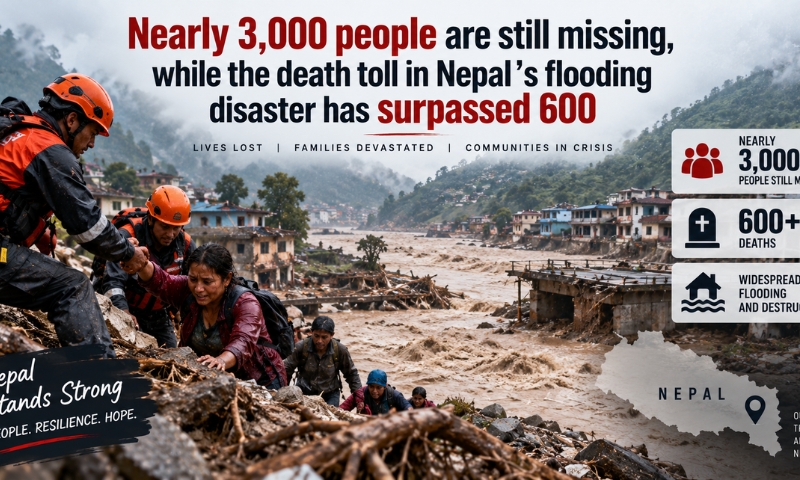
In Nepal-Tibet, flood deaths have surpassed the 600 mark as the Nepalese government has not been able to account for nearly 3,000 flood victims.
The disaster is raging on the Himalayan border and is mounting and worsening by the hour. Rescue workers are working through mud and flooded roads, and with the potential of another surge, a wall of ice and rock pounding a mountain river on Wednesday has spiraled into one of the most devastating natural disasters the area has experienced in years. Dozens of Australians are missing and this adds a distinctly Australian edge to a tragedy that is taking place thousands of kilometers away.
Search intensifies in Nepal as the toll of the floods keeps mounting
At least 626 people have died and nearly 3,000 remain missing in the disaster-hit area, authorities in Kathmandu confirmed on Saturday morning. The officials believe that a large ice block under way in a high mountain region, unleashed a flood of debris and water which crashed through villages without warning. Market towns were literally erased from the map as whole communities along the riverbanks were flattened within minutes, witnesses on the scene told the Red Cross.
Over 93,000 are believed to have been caught up in the emergency in some way, from being displaced to injured or not knowing what is happening to missing family members. Hundreds of the missing have been identified by hydropower workers along the river, as a reminder that numerous activities are right in the line of construction.
Australian MIA in the Nepal-Tibet Disaster Zone
Family life at home has been agonies. At least 41 Australians are still missing despite search teams sifting through the debris on both nations’ sides of the border. Those missing had been travelling independently, some in organized pilgrims and the others in small tour groups, Foreign Minister Penny Wong said. Department of Foreign Affairs and Trade is trying to locate the missing Australians “urgently” and consular officers are working around the clock. So many foreign nationals were swept up into the flood in the first place, in part because the border zone itself, also known as the Nepal-Tibet corridor, has long been a popular destination region for hikes, spiritual travelers and adventure tourists.
NSW Families Stuck in the agonizing news waiting period
The sad tale of a fifty and sixty year old married couple from Sydney, who had come to the area on a pilgrimage after being motivated by a spiritual teacher in India, has been some of the most heart-wrenching stories to come out. NSW friends say the pair were last in touch when they cleared immigration on Monday this week and have heard nothing since.
A group that had been en route to the country’s capital for a tour that included several from Sydney and the surrounding area, went missing earlier in the week, and a candle-lit vigil was held outside Parliament House in Canberra, where community leaders in the Nepali community prayed for the dead and the missing.
Challenges of Nepal-Tibet border of snowy landscape
It has been nearly as challenging to reach out to the people who were affected by the flood. The water has been cutting through the roads and many dozens of bridges have been lost, while mobile networks are out of service along much of the border. Disaster researchers say the topography that made these river valleys so appealing to villages and hydropower projects is the very thing that’s making it difficult to enter or exit the area: helicopters are often the only way in or out. Meanwhile, search dogs and inflatable boats were brought in to reach the worst hit area by the mudslide, two days after the disaster on the Tibetan side, by the Chinese rescue teams.
As Nepal rebuilds, so does International Aid Flows In
The governments of the world have started to pledged money and personnel to support the recovery. Canberra has pledged an assistance package valued at $5 million that has been split between the World Food Programme, local aid partners who are providing shelter and medical assistance and an alliance that will fund community-led reconstruction initiatives, and Canberra’s consular officials are still working to identify all of the missing Australians. Others, including officials from Canada, the United Kingdom, and several other countries, have pledged additional assistance, including a British rapid deployment team; we are told that the British will be sending a staff to the area as well as a rapid deployment team.
UNICEF estimates the numbers of affected children to be about 17,000 and will assist local authorities in reuniting children with their families. The next challenge is straightforward but formidable: moving as many as they can to safety, including the Australians still on the missing list; with the notoriously turbulent local climate potentially setting another trap for the rescuers.