
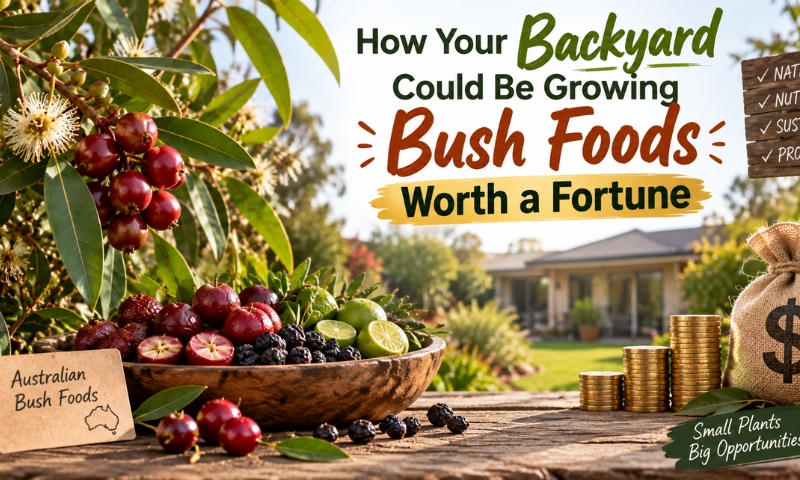
When it comes to Australia(WA), variety of flora is well known. Stand still long enough in almost any patch of native bush land and you’ll start noticing bush food everywhere. Sandpaper figs hanging off a branch, peach berries scattered through the undergrowth, a cocky apple tree quietly doing its thing by the path, maybe even a native yam vine winding through the grass. For Samantha Martin, known widely as the Bush Tukka Woman, this isn’t a curiosity, it’s simply what growing up eating off the land looked like, first in WA and now in the far north corner of Australia she calls home.
Bush Foods Growing Wild Across Australia’s Own Backyards
Martin was raised with a passion for cooking goanna on hot coals, and catching barramundi and bream out of local rivers and creeks—and she’s been spending years since getting other households around the country to do the same. Her pitch is simple: Use lemon myrtle instead of rosemary and thyme; use lemon instead of lemons or limes; and be not afraid to use kangaroo or crocodile in curries, stews and stir-fries. Martin says people are only now beginning to appreciate that the number of native plants that fit the definition of true super foods actually are high in nutrition and medicinal benefits, and that these plants are being found on menus and cooking shows throughout the country.
A bush Tucker journey from WA’s Kimberley to North Queensland
Martin is a proud Jaru woman from the East Kimberley region of WA but today lives in Cairns, several thousand kilometres away from where she is Australia’s native. That trip north to south has clearly influenced her perceptions of indigenous food – not as something you only find at your side of the country, but something that’s available to all with a backyard or a patch of bush close by. She wants people to get up the courage to actually use it for cooking, and others do, too. From the Far North to the tropics, a few small (but growing) projects led by Aboriginal people are making that same idea more structural as they develop livelihoods based on plants that never left them—or just never made it to market.
Growing Yam Crops the Traditional Way in North Queensland
One of the more ambitious projects belongs to Henrietta Marrie, a Gimuy Walubara Yidinji Elder from the Cairns and Yarrabah region, along with Tracy Gray and Roy Gray Junior. Together they’ve planted their first yam crop, using close to 400 seeds and tubers across three different varieties. Both traditional owners travelled to Nigeria and came to know that it is a part of their traditional diet. It is a starchy root and is used as a substitute for potato. It is used in soups, stews and even ice cream, because it is converted into flour. Now they are assessing its nutritional value, so that its usage can be backed by hard scientific evidence.
How LIFES Is Helping Communities Turn Bush Foods Into Business
Martin’s own mentoring work now happens through the Local Indigenous Food Enterprise Services, or LIFES, based in North Queensland, where she helps Aboriginal communities figure out how to grow native crops and turn them into viable businesses. LIFES president Mark Harbrow says bush foods and bush medicines have existed for millennia, and that Aboriginal and Torres Strait Islander people have always understood their nutritional and medicinal value, even if the wider population is only catching up now. He sees real value in non-Indigenous Australians recognizing that these plants have been growing in their own backyards the whole time, often overlooked simply because nobody told them what they were looking at.
Australian Bush Foods & Yam is the new sensation in the Australian home cooking market.
This is unfolding at every event she caters from her Indigenous business in the region, from small family events to larger events throughout Australia Barbra Drummond, Indigenous catering business owner, in the region, is seeing this change at every event she cooks up – small family gatherings to larger events throughout Australia. She was raised to know that food was not just food but a celebration and a connection, both as a Wagadagam and Wuthathi woman from Mabuiag Island, in the Torres Strait. Bush foods shouldn’t be worshipped, adds Marrie, but more a part of everyday eating like yam did for her family for generations, as it still does for those growing them back in WA and all the way north of the country.
It’s a definite trend that’s continuing to grow from one backyard discovery to the next whether in WA or anywhere else with a little native bush to be found, as more chefs, home cooks and even convention centers across Australia learn to cook with native ingredients and use yams in dishes.