
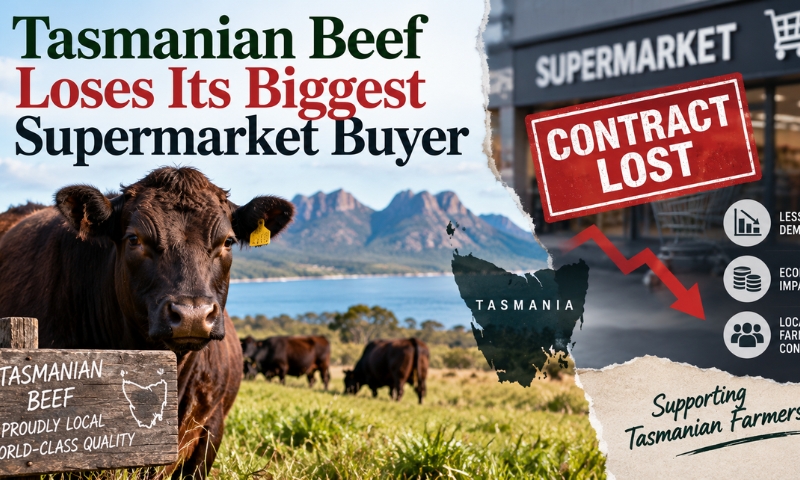
Cattle farmers on the Apple Isle got a rude shock this week when they were told that Tasmanian beef is going to be gone for good from one of the country’s biggest supermarket chains in the next 18 months. The decades long commercial partnership between Woolworths and farmers is coming to an end in 2027, it has announced and the void it leaves will not be an easy one to fill, farmers have said. The announcement has come at a time when the state’s cattle heartland was becoming increasingly dependent on the guaranteed income a big retail contract had brought.
With freight costs on the rise, Woolworths have to pull out
The move is about economics, in the form of a growing price for killing and transporting cattle across Bass Strait, according to Woolworths. The retailer is now buying its beef from a handful of local farming partners, which must be killed at an abattoir on the mainland and then shipped back to the shelves, in Tasmania and interstate. The supermarket was “very mindful” of the impact the change will have on those involved and will be in close contact with growers during the transition period, the company said. Importantly, the company says this is not a broader withdrawal from the state, it will continue to purchase other products from Tasmania, such as fruit and vegetables, as its beef supply chain slows its pace.
Scottsdale Farmer Jerrod Nichols Feels the Blow
For Jerrod Nichols, a cattle farmer near Scottsdale in the state’s north-east, the news lands close to home. He has supplied roughly 40 head of cattle a fortnight over the past two years, and says having that contract locked in gave him the confidence to keep investing in his herd despite a volatile market. Nichols wasn’t entirely surprised by the call, though, pointing out that Tasmania no longer has a dedicated contract kill abattoir, which forces processors to send stock to the mainland and back again at considerable expense. He described the change as “another kick in the guts” for producers already dealing with tight margins, and said he would now need to negotiate directly with meat processors to try to secure a similar level of certainty going forward.
Coles Already Skipped Local Beef, Tassie Growers have Fewer Options
The retreat from Tasmanian beef isn’t happening in isolation. Coles has not bought locally grown beef for some time, which means island producers now have one less major domestic buyer to turn to once Woolworths exits the category entirely. Coles does remain a significant purchaser of Tasmanian lamb, running a seasonal program that keeps local lamb on shelves for much of the year, but that offers little comfort to cattle farmers watching their options narrow. Industry figures say the situation highlights just how thin the retail market has become for producers in Tassie, who already have fewer processing and buying choices than their counterparts on the mainland. George Shea, who chairs the state farming body’s livestock council, said growers would need to keep adapting and hunting for new outlets, even if the timing of this latest blow is far from welcome.
The future of Tasmanian Beef and Woolworths’ Local Suppliers
Farmers will have an opportunity to plan ahead for the end of 2026 as the Tasmanian beef contract is ending, albeit quietly, at the end of this year, according to Woolworths. For growers such as Jerrod Nichols, it means new negotiations with processors to secure “baseline numbers” to give them some certainty in their businesses. Other farmers in the industry are concerned that the departure may accelerate a general trend in other areas of Tassie away from cattle and are considering whether it’s still a profitable investment. Regardless what the outcome of the episode is, it’s brought small regional supply chains back to the spotlight as it comes to the issue of whether the big boys control the fate of the little guys and whether the island growers have as much control over their own fate as they think they do.
Consumers may not notice the shift straight away, since Tasmanian beef will still sit on supermarket shelves under existing supply arrangements right through to the end of 2026. But industry watchers say the longer-term effect could be felt well beyond the paddock, from regional abattoir jobs to the freight operators who move stock across Bass Strait each week.