
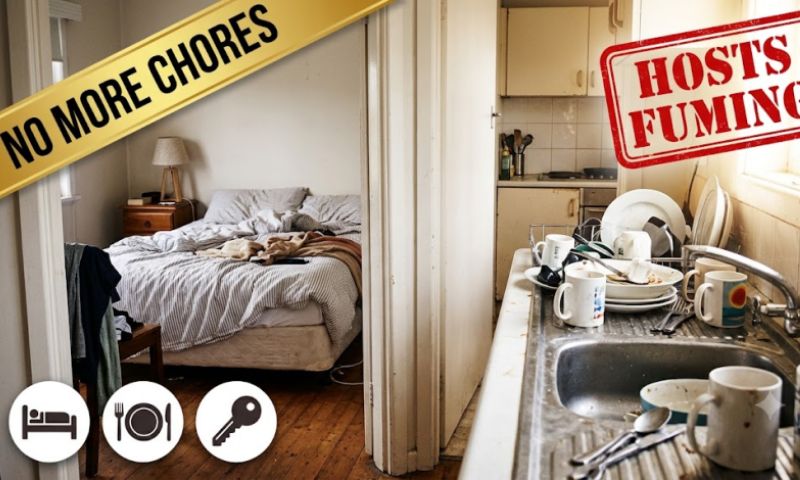
Anyone who’s stayed in an Airbnb knows the list. Fridge door, usually. Just under the Wi-Fi password.
Well, not for much longer. From 20 November, Airbnb check-out chores like those are off the table. Hosts won’t be able to make guests do them, even when there’s a cleaning fee on the bill, the ABC reports.
Guests are thrilled. Plenty of hosts? Not so much.
So what’s actually banned?
Quite a lot, it turns out.
Hosts can’t require guests to wash and put away dishes. Or strip the beds. Or start a load of washing. Taking rubbish off the property is out too, and so is anything a cleaner would normally do.
Which stays count? Anything booked from 20 November on. Booked before then? The old house rules still count.
A few small asks are still fine. Hosts can request that used dishes go in the sink, towels get gathered up and rubbish goes in the right bin inside. Switching off the air con on the way out is OK too.
But here’s the catch. Those are now just requests. Guests are “encouraged” to follow them, Airbnb says. They don’t have to.
Seven rules that still stick
Airbnb has boiled the must-follow rules down to seven. Guest numbers. Quiet hours. Events. Pets. Smoking and vaping. Commercial filming. And locking up when you leave.
Break one of those and a host can cancel without a penalty. Leave the plates on the bench? Nothing much happens.
No more surprise fines either. Rules added by text message or a sign after you’ve booked won’t count, according to short-term rental site Rental Scale-Up.
Why bother? Clearer rules and fairer check-out asks, according to Airbnb. Hosts can still set their own rules, it says.
“Not there to water the plants”
Felicity Stevens has run a northern beaches cottage on Airbnb for 14 years. Sydney’s Airbnb host club? She runs that too. Around 800 members.
She doesn’t reckon a quick tidy is a big ask.
“I don’t think it’s too much to be able to ask a guest to put the dishwasher on before you leave,” she told the ABC.
Still, she gets why Airbnb did it. Some hosts had gone too far, she says. Her own view of guests is pretty relaxed.
“You’re on holiday … you’re not there to water the plants.”
Hosts plan a blackout
Not everyone’s taking it so calmly.
Online petitions have popped up. So have some very cranky posts on Airbnb’s community forum. And some hosts are planning a “nationwide host blackout” on 20 November. The idea? Close their places to bookings for the day the rules kick in.
Up in Townsville, one host has three listings. Her plan? Maybe just lock guests out of the kitchen. Won’t clean up? Then don’t cook.
Overseas hosts are fired up too. “Completely unacceptable and utterly disrespectful to us hosts.” That was Sandy, from France.
Andrea, in New York, had another idea. “We could start charging a ‘dishes and utensil fee’.”
So guests might dodge the chores. They could still end up paying for them.
How did we get here?
Airbnb started in 2007, with two blokes renting out air mattresses in their San Francisco flat. Their names? Brian Chesky and Joe Gebbia. The name? Airbed & Breakfast. The name got shortened a year after launch.
Now it’s huge. More than 9 million active listings, and revenue of US$12.2 billion (about A$17.4 billion) last year.
Tourism researcher Sara Dolnicar has watched it change. Bit by bit, she says, “it became more and more like hotels.”
Guests noticed. “Now, as it became more perfect, the expectations also increased alongside that,” she told the ABC.
Pay hotel prices, expect hotel service. That’s pretty much where the fight sits.
Booking a summer getaway?
Holiday house booked for after 20 November? Expect a much shorter fridge list.
Hosts can still ask nicely, though. And if there’s a big cleaning fee and the place is spotless when you arrive, putting the mugs in the sink won’t kill you.
Whether hosts actually go dark on 20 November is another question. With summer bookings rolling in and housing already tight in plenty of holiday towns, a day off costs real money.
We’ll know soon enough.