
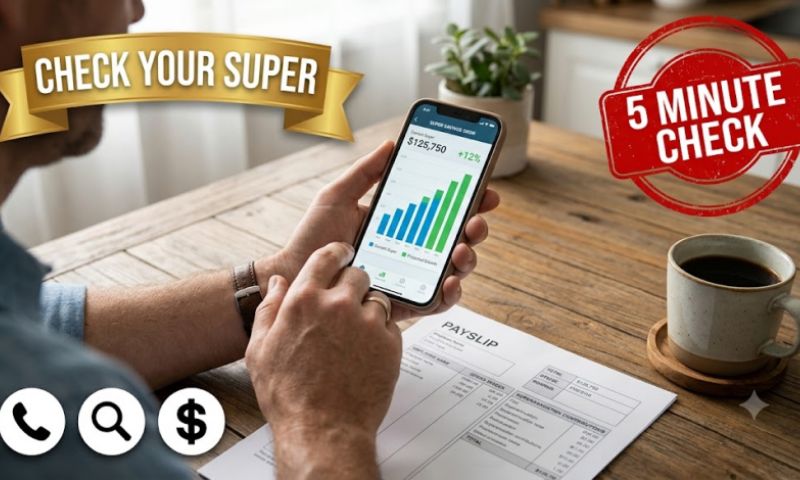
Your payslip says super’s been paid. Has it, though?
Most of us never check. Why would you? It’s in the fund. Growing. Probably. But unpaid super is a bigger problem than plenty of people realise. Some workers only find out years later, when the gap is huge.
The good news? It takes about five minutes to check your super. Here’s how.
First, how much should you be getting?
Twelve per cent. That’s the super guarantee rate right now.
So if you earn $1,000 before tax in a week, your boss should be putting roughly $120 into your fund on top of that. Overtime? Usually not included. It’s your ordinary pay that counts.
Casual? Part-time? Doesn’t matter. You’re still owed it.
Remember the old $450-a-month rule? Earn less, get no super. That’s gone. It was scrapped back in July 2022.
Under 18? You get super too, as long as you’re working more than 30 hours a week.
Payday super changed the timing
This one’s new. Bosses sitting on your super for months? Not since 1 July 2026.
It’s called payday super. Your contribution now has to land in your fund within seven business days of payday, the ATO says. Just started a new job? Then it can take a bit longer.
Before this, a lot of employers paid quarterly. Every three months. Easy to miss a problem that way.
Step one: open your fund’s app
Quickest way to check? Your super fund’s app or website.
Log in and look for contributions or transactions. Payday, then a deposit from your boss a few days later. That’s the pattern. Check the date. Check the amount.
Does it roughly match 12 per cent of what you earned? Good.
Gaps? Weird amounts? Payments that stopped a few months back? Keep reading.
Can’t remember which fund you’re with? Happens to everyone. myGov will tell you.
Step two: check through myGov
Sign in to myGov and link it to the ATO, if you haven’t already. Grab an old tax return first. It asks for details off it.
Then head to the super section in ATO online services. Every fund in your name pops up. So do the payments your bosses reported.
This view can lag behind your fund’s app a bit. But it’s handy for spotting old accounts you forgot about, too.
Something’s missing. Now what?
Start with your boss. Feel OK asking? Find out three things. When it was last paid. Which fund. How much. Honest mistakes do happen. A wrong fund number, say.
Doing it by email is smart. That way there’s a record.
Still no answer? Or the answer doesn’t add up?
Then it’s time to go to the ATO. There’s an online tool for reporting unpaid super, and it’s free.
What you’ll need to report it
Have these handy. Your tax file number. The dates you’re worried about. Plus your boss’s ABN. Check your payslip for that one. If it’s not, you can find it on the ABN Lookup site.
The ATO will ask if it can use your name when it contacts your employer. Saying yes may help you get whistleblower protection.
Rather stay anonymous? You can use the ATO’s tip-off form, or call 1800 060 062.
Be ready to wait
Overnight fix? Don’t count on it.
It’ll confirm it got your report. Later, it’ll write to you by letter or email about whether it can get the money back. That can take a while, and not every report ends in a payout.
So the earlier you catch a problem, the better. Chasing $300? Doable. Chasing three years of it? Much harder.
Sound familiar?
Super on the payslip. Balance stuck. Your boss says you “don’t qualify”. You’re asked to invoice as a contractor when you’re really an employee. Or you’re offered a bit of extra cash instead of super.
Any of those? Check your fund today. Not next month.