
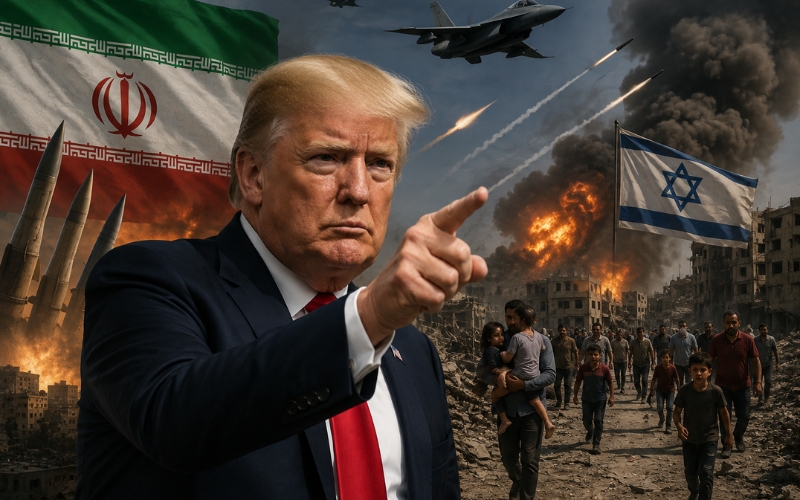
Donald Trump Iran tensions have once again become a major focus in the Middle East as U.S. President Donald Trump warned of possible military action against Iran while Israel continued its operations in Gaza. The developments have increased uncertainty across the region and raised concerns about security, trade routes and diplomatic stability.
The US state Department is keeping a close watch on security developments as the situation unfolds and is engaging with regional allies. Meanwhile, there are humanitarian issues that continue to be at the top of the agenda in Palestine, with civilians still suffering the effects of long-term conflict. Some countries have reiterated demands for dialogue and a permanent political solution, such as Egypt.
Donald Trump Iran Tensions Draw Saudi Diplomatic Response
One of the best diplomatic statements has been made by the Gulf. Saudi Crown Prince Mohammad Bin Salman is said to have personally called on U.S. President Donald Trump to refrain from further attacks on Iran if he does not want to face counterattacks throughout the region.
Saudi Crown Prince is thought to have emphasized the importance of diplomacy as energy markets and regional stability continue to be challenged. The Gulf countries are also worried that if the conflict were to resume in any open manner, it may spread beyond Iran and Israel to neighbouring countries and international shipping routes.
Donald Trump Iran Crisis Raises Regional Security Concerns
The security threat has now gone beyond Israel and Iran, with reports of attacks on military installations in Kuwait and threats to commercial shipping in the Strait of Hormuz. The incidents have sparked concerns about one of the world’s most heavily trafficked energy corridors.
The governments of Bahrain and Kuwait have stepped up security measures and are paying close attention to developments in the region. If shipping is interrupted for a long period, it could cause huge economic losses, both for the international trade and the world’s oil supplies.
The US has affirmed that it will “work with regional partners to ensure freedom of navigation is protected” and is still consulting with regional partners. The US state Department has also urged citizens in the hit areas to be vigilant as the diplomatic process continues.
Israel raids Gaza in response to Hamas pledge to disarm
A significant breakthrough occurred when Hamas declared willingness to pursue a disarmament plan as part of a proposal that was backed by the international community. Yet Israel launched military operations, pointing to concerns over security which has not been resolved until any agreement is fully verified.
The draft plan, it is said, calls for gradual dismantling, restructuring of international monitoring and oversight, and changes in governance, while Israeli authorities have insisted that the military action will continue until it reaches a point where there will be definite assurances of security.
Some of the fighting has been heavy in Northern Gaza, where Israeli operations are ongoing and hostage recovery and the destruction of militant infrastructure are underway. The prospects for any long-term Ceasefire are unclear, with continuing negotiations held in private.
Negotiations continue, diplomatic pressure is mounting
Multiple area governments are trying to stop the conflict spreading into other areas. Egypt has been holding talks with international mediators for a return to dialogue between the parties; the Gulf nations have urged resuming diplomatic efforts.
While recent reports indicate diplomatic efforts continue against Iran, U.S. president Donald Trump has been adamant that military pressure is still an option. Negotiations in the region are expected to defuse the current situation and prevent a further escalation of the conflict.
In the interim, Israel and Hamas are under increasing international pressure to achieve a sustainable Ceasefire that meets security needs and gets humanitarian aid to the people of Gaza.
Outlook remains uncertain
The next few weeks could decide the fate of the region between diplomacy and further confrontation. Military readiness is high, with the governments across the Middle East all calling for restraint to prevent a wider regional conflict.
Immediate cessation of violence and better access for humanitarian aid are top priorities for millions of civilians in Gaza. The outcome of the negotiations will rely on the US, local and regional governments and stakeholders’ willingness to go beyond military actions and reach a lasting political solution.