
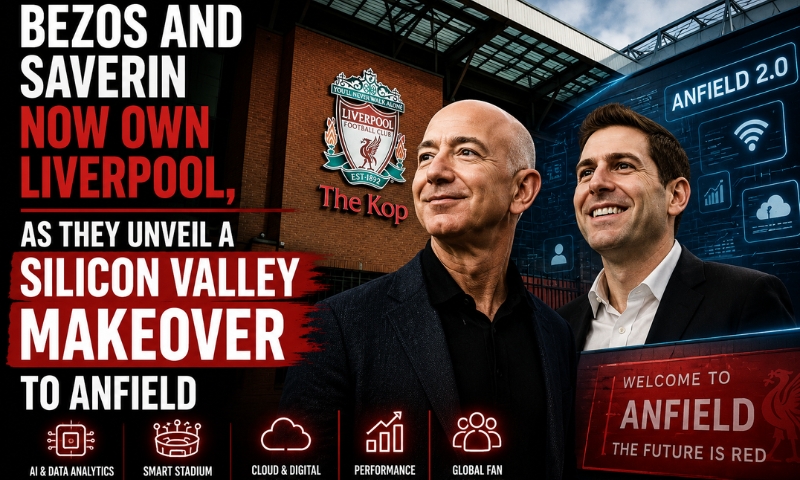
The club’s new list of shareholders has some new names and they’re no closer to corner flags than they are to online shopping carts and social media feeds. Jeff Bezos, founder of Amazon, a company that began in a Seattle garage that is now worth trillions of dollars, has invested in a minority stake of the Merseyside club with Facebook founder and co-founder Eduardo Saverin. It’s a crossover that would have seemed like a far-fetched idea 10 years ago. It has led to the two most recognisable tech fortunes coming together in one of England’s most decorated football clubs’ dressing room and ended Fenway Sports Group’s sole ownership of the club.
Fenway Sports Group Confirms the Sale
On Friday, Fenway Sports Group (FSG), the club’s owner, announced the signing of a “definitive agreement” with a dealership known as 1892 Holdings, which dates back to the year the club was established. FSG had previously indicated that it would be a “strategic minority investment” discussion, not a reality in July as it had said. However, it maintains majority control and operation of the club. But this is one of the biggest sport deals ever – it has been estimated that Liverpool is worth anything between $6billion and just over $7billion depending on which source you believe.
What Jeff Bezos Brings to the Table
For Jeff Bezos, this is new territory. He’s had past links to American sports franchises, sure, but this marks his first confirmed investment in a football club anywhere in the world, let alone the Premier League. His involvement runs through K5 Sports, and while he won’t hold a boardroom seat, his star power alone has already reshaped the conversation around this takeover. Forbes puts his fortune at around $280 billion, making him one of the two or three wealthiest people alive – a fact that hasn’t gone unnoticed by club supporters wondering what his arrival might actually mean for them. Worth noting: until this deal, Fenway Sports Group had never sold equity in the club to outside investors, which is part of why his arrival feels so significant.
The Facebook Connection: Saverin’s Side of the Deal
Saverin’s route into the deal runs through EE Capital, the family office he shares with his wife Elaine, who’s reportedly set to join the board herself. His history is familiar enough: He was a founder of Facebook with Mark Zuckerberg at Harvard, and had a somewhat public falling out and lawsuit over his ownership rights. He later moved to Singapore, and made another fortune as a venture capitalist, with Forbes saying that he now has a net worth of nearly $36 billion. Despite years of branching out from that platform, his connection to the platform remains the primary way people know him.
The club was purchased by FSG (Fenway Sports Group) for a number of reasons. First of many was their six European Cup victories and they have also won top flight championship. So they know that they will be able to earn back their $400 million.
Premier League Rules Mean No Immediate Spending Spree
Don’t expect the new money to translate instantly into a spree at the January transfer window. Premier League financial sustainability rules tie spending to a set percentage of football-related revenue and profit from player sales, so fresh investment from Jeff Bezos won’t unlock a blank cheque overnight. Where the impact is more likely to show up is commercially: sponsorship deals, global marketing reach, the kind of brand instincts that come naturally to people who’ve built tech companies into household names.
Mike Gordon, president of Fenway Sports Group, framed the sale as a continuation of the club’s long-term thinking, saying the group found common ground with Bhatia’s consortium on what makes the club special. Bhatia, for his part, called the investment a genuine belief in Liverpool’s leadership and its prospects going forward. Whether that optimism turns into silverware is anyone’s guess. But with Jeff Bezos and Eduardo Saverin now part of the ownership structure, Liverpool’s name is about to travel into markets it’s never quite reached before – even if the shirts stay exactly the same.