
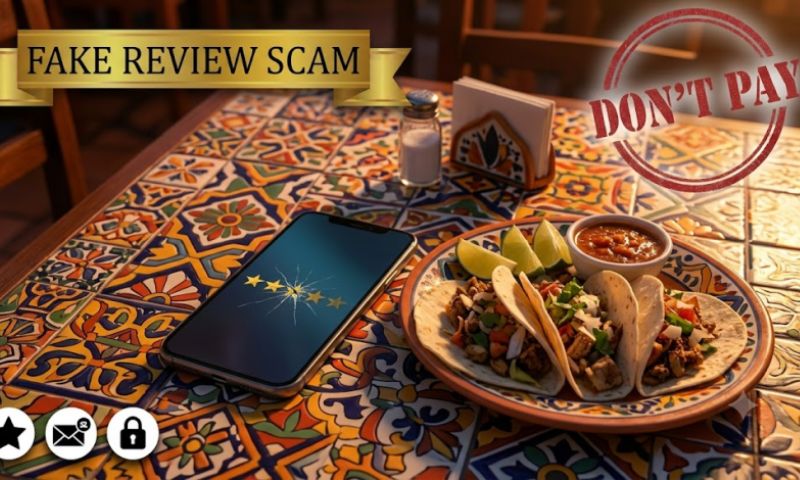
One tenth of a star. Most of us wouldn’t notice. Denisse Rojas-Valdez did. A few days later the emails started. Turns out it was a fake review extortion scam. Aimed at her little Mexican place in Adelaide, of all things.
She runs Que Onda Wey! in Goodwood with her husband. Regulars love it. Most of them never write reviews, though.
“I got these emails and started to realise I was a victim of extortion,” she told 891 ABC Adelaide.
A guy called Eric, then a girl called Amelia
It kicked off in early October with one bad review.
A few days later, an email turned up from a so-called reputational management company. Apparently US-based. It said the review might “conflict with Google’s review policies” and offered to get rid of it. For a price, of course.
She ignored it. More emails came. The review, from someone called Eric, could “potentially be taken down”, they said. Payment would be “success based”.
“I blocked them and I reported it as phishing.”
Problem solved? Nope. About five days later, the same mob was back with a slightly different email address.
“They still were able to reach me, but then I was double-checking and they had put just one extra letter.”
This time it was about a review from someone called Amelia, complaining the food was overpriced and “the hot pot next door is much better value for money”.
One small issue. There’s no hot pot next door. There isn’t one nearby, either.
WhatsApp offers from overseas
It wasn’t her first brush with this stuff. Earlier in the year, the restaurant got similar “reputation” offers over WhatsApp from numbers in Bangladesh and Pakistan.
Could be coming from anywhere, she figured.
Google actually has a name for it. The “negative review extortion scam”. First, a sudden pile of one and two-star reviews, Google says. Then someone pops up wanting cash, goods or services to make them disappear.
Google’s advice is simple. Don’t engage. Don’t pay. Paying “could encourage further attempts” and “doesn’t guarantee the removal of reviews”. Grab screenshots quick. Then there’s a merchant extortion form to fill in.
Denisse did exactly that. She called it “a lot of work”. Google later told her it had “removed the reviews that violated Google’s policies”. A few others stayed up.
“It’s not about the stars”
Why bother with all that over one tenth of a star?
“It’s not about the stars,” she said. People might reckon there’s new management, she said. That the food’s slipped.
“I was really upset.”
She also planned to report it to SA Police.
Scamwatch has had a “very small number” of these this year. That’s from the National Anti-Scam Centre. There was a spate back in 2019. Some of the groups are working from overseas. Its message to business owners is blunt: “These are scams.”
How big is it? SAPOL can’t really say. Online offending “can be facilitated from anywhere in the world,” a spokesperson said. Keep screenshots and emails. If you’ve lost money, call your bank straight away and report it to police through ReportCyber.
Regulars to the rescue
Then the nice bit. Denisse posted about the whole saga on Facebook, and her customers turned up. Online, anyway.
“I started to receive [positive] reviews, like probably 10 that day, from customers.”
Regulars who’d never written a word. New faces too.
“It was so beautiful. You realise that you are doing a good job and people like what you are doing.”
The rating’s back at 4.9.
The Napoleon Perdis data breach hit 340,000 customers. This was one restaurant. Still. For Denisse, it was personal.
“This is a big deal. We need to fight because we are working hard.”