
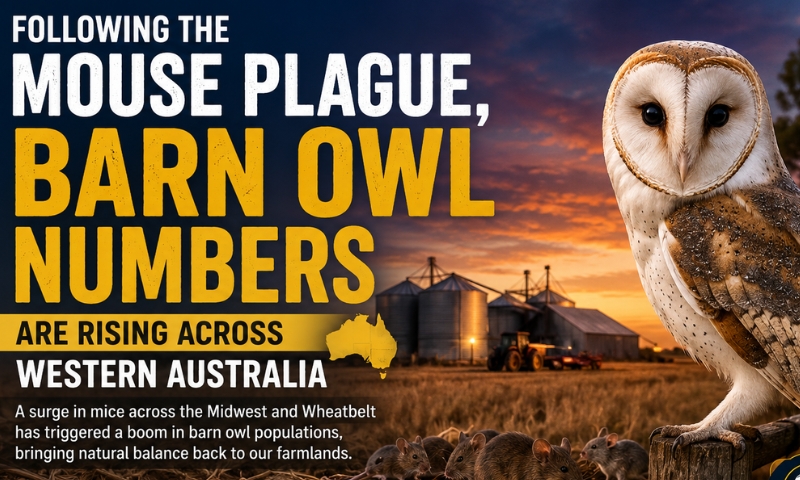
Sightings of barn owls have been increases in Western Australia’s Midwest and Wheatbelt. Their sudden abundance is not a coincidence. It is the direct result of the mouse numbers exploding across the region, and it is giving farmers, ecologists and everyday residents something to talk about besides the damage the rodents themselves have caused.
Another reason for this boom is, drop in the use of Owl Killing rodenticide, many experts say. Due to such reasons, number of owls now is more than there are mice on which they can feed.
A Bumper Harvest, Then a Plague
The story starts with last year’s grain harvest. Western Australia brought in a record crop, and all that leftover grain, spilled seed and volunteer canola sitting in paddocks over summer turned into an enormous buffet for house mice.
Add a wet start to the season and mild conditions, and the mice had everything they needed to breed at a staggering rate. By early autumn, growers from Geraldton down through the grain belt and out toward Esperance were reporting burrow counts in the thousands per hectare.
Pest controllers in towns like Morawa said they had never seen household infestations like it. This is the kind of Western Australia plague that turns up in kitchen cupboards as much as in silos.
Barn Owl Boom in the Wheat belt
Where there is a glut of rodents, predators are never far behind, and this year’s barn owl boom is one of the more visible side effects of the outbreak. A single breeding pair can chew through an amazing amount of mice in a season and with all that food out there, it doesn’t take that many more fledgling mice to survive to fledge and more owls to move in to fill the void. In Western Australia’s Wheatbelt and Midwest locals report sightings which they previously saw once in a while are more common around grain sheds and at the edge of paddocks.
Owl-Killing Rodenticide under Scrutiny
The problem is that even the mouse control product most people use to keep mice at bay can kill the birds who are working for them for free. Second generation anticoagulant baits are very effective in reducing rodent populations and have a long residency in the body of a mouse. After feeding a number of poisoned mice, the owl accumulates the toxin in its body and may die weeks later. The Owl Killing rodenticide has been recorded in birds of prey, reptiles and even threatened quolls, and one wildlife carer reported killing over a hundred native birds dead or dying after baiting a small farming town, Coorow.
Bait Use Falling as Farmers Look to Nature
There are early signs that bait use is falling in some districts, at least when it comes to the harshest chemical options. Growers who once reached automatically for the strongest bait on the shelf are increasingly weighing up the cost to the barn owls and other predators working their paddocks for free. Some are switching to first-generation products, which are less potent and less likely to build up in the food chain, while others are simply leaving nest boxes up and letting the birds do more of the work. It is not a wholesale shift, and plenty of farmers still feel they have no choice but to bait heavily when the mice are stripping a crop bare. But the conversation has changed, and that shift toward bait use falling in favour of natural predators is being welcomed by anyone who has watched an owl work a paddock at dusk.
What Wildlife Groups Are Doing
Wildlife groups in Midwestern Australia have been among the loudest voices pushing for change. They have been running education campaigns urging households and growers alike to check labels, avoid the most toxic baits, and report sick or dead birds so the true scale of secondary poisoning can be tracked. Several of these wildlife groups in Midwestern Australia are also encouraging landholders to install nest boxes, arguing that a resident pair of barn owls can do more sustained damage to a mouse population than a single round of poison ever could, without the risk to everything else further up the food chain.
Looking Ahead
Mouse plagues in this part of the country tend to be boom-and-bust events, and this one is expected to ease as the season turns and conditions become less favorable for breeding. What may outlast it, though, is a shift in how people think about pest control. Farmers who have watched barn owl numbers climb through the worst of the outbreak are increasingly willing to give the birds room to do their job, and if that trend holds, the next Western Australia plague might be met with a few more feathered allies already on the payroll.