
Twenty-two years, Travis Gilbert went without a gap in work. Then the job went. He dipped into his super for bills and groceries, and now he’s one of the faces behind the new Foodbank Hunger Report.
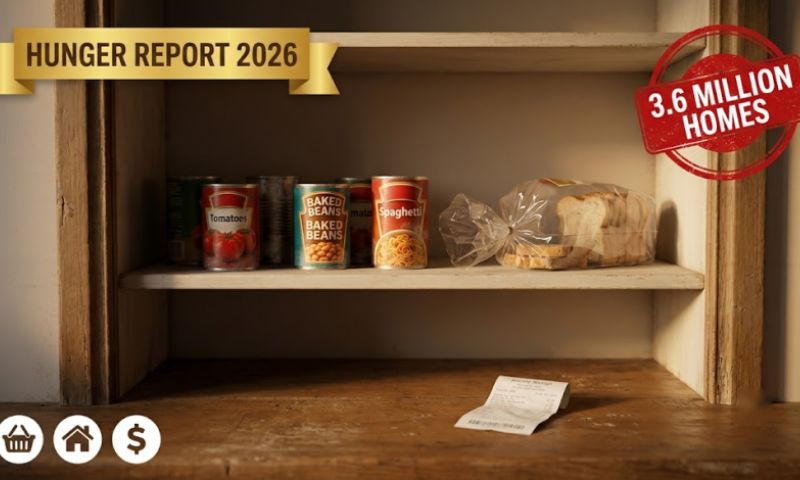
He’s got plenty of company. The report, out this morning, says 3.6 million Australian households went without enough food at some point in the past year. That’s 100,000 more homes than last year.
One in three
Think about your street. Every third house.
That’s how common food insecurity is now, according to the report. One in three households. Same share as last year. More homes, though.
And this part stings. Nearly seven in ten of those households had never been in that spot before. First time skipping meals. First time asking for help.
Kylea Tink is Foodbank Australia’s chief executive. Her line is blunt: “for one in three households, Australia is now the Hungry Country.”
Food goes first
Why food? Because it’s the easiest thing to cut, Tink says.
Rent has to be paid. Power, too. The grocery bill is the one that bends. She called food “the canary in the coal mine”, the first sign a household is in trouble.
Cost of living and rising interest rates are the likely drivers, she told the ABC. The report backs that up. Of the households going hungry, 92 per cent named cost of living as a top worry.
Renters are copping it hardest. Fifty-one per cent are food insecure, compared with 12 per cent of people who own their home outright. No shock there. We already knew renters have hit their limit. The numbers said so a fortnight back.
Who’s struggling most?
Young people, for one. Almost half of households aged 18 to 34 are food insecure.
Families with kids? Forty-five per cent. Single parents? Sixty per cent.
Middle earners aren’t safe either. Households on $33,800 to $90,999 a year sit at 37 per cent. Part-time and casual worker households hit 42 per cent, a record.
Out in the regions, almost one in four households face severe food insecurity. In the cities it’s 18 per cent. More than half of First Nations households are affected, with 40 per cent in the severe range.
“It can happen to anyone”
Rhonda Owen volunteers with HelpingACT. Plenty of the families at her door? First-timers. Never asked before.
Gilbert, in Canberra, found that “quite shocking”. People on full-time pay are lining up at food pantries in the ACT, he said. Is he hopeful the politicians will fix it? Not really. He’s “pessimistic”.
It’s no wonder shoppers are watching every cent. Rent’s up. Groceries are up. Add the egg cartel case to the pile. Who’s playing fair at the checkout? Hard to say.
Breakfast at school
There is one bright spot. School brekkie. Foodbank’s behind 3,649 of those programs now, and hungry families are leaning on them more. Among food insecure households with school-aged kids, use jumped from 36 to 45 per cent in a year.
By 2030, Foodbank wants a national minimum standard for school brekkie programs. Earlier this month the feds gave it $700,000 in surge funding. Welcome, sure. And it’s asking big business to chip in. “One dollar can put two meals on the table,” it says.
Tink admits there’s no quick fix. Hunger “has become a part of our Australian story,” she said.
If you’re struggling, you’re not alone. Foodbank’s Find Food tool at findfood.foodbank.org.au shows food relief near you. Embarrassment stops almost half of hungry households from asking. It shouldn’t.