
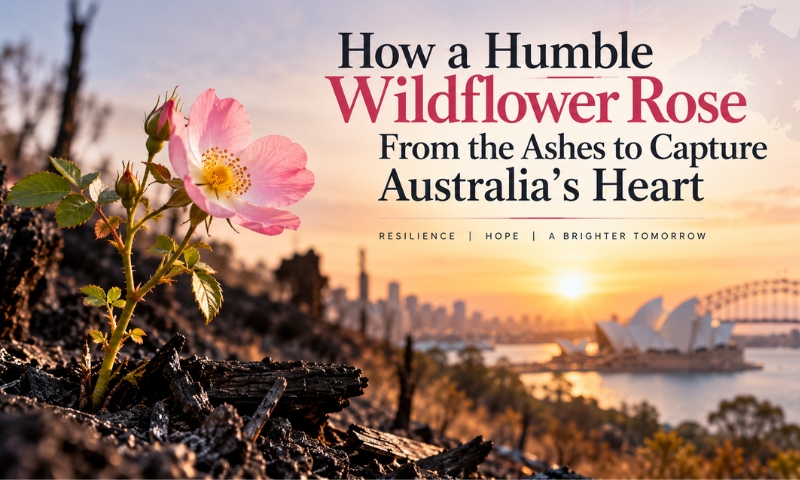
A relatively plain flower has won Australia’s most amazing wildflower this National Science Week and, having discovered its secret history, there is no reason to dispute. What is more remarkable about this wildflower is that it was almost wiped out in summer bush fire of 2020. It was highly unlikely that it would be seen again, but against all odds it now exists in the same place more vibrantly.
Australia’s NEW Favorite Wildflower
The flannel flower is instantly recognized in most gardens across the country and is greeted with its soft and woolly star-shaped flowers and grey-green leaves. The surprise is that it looks like a daisy, but in fact is a member of the same family that produces carrots, celery, parsley, and fennel. This isn’t just one plant rather a whole dynasty of plants that span the country in extremely varied habitats from coastal sandstone to desert cliff face, with 14 species throughout the country, plus an additional species present in New Zealand only.
From NSW to Western Australia: A Flower With Many Faces
Most people picture the flannel flower most commonly seen around Sydney and along the state’s coast, the species florists and nurseries sell as cut stems. But head across the country to Western Australia and you’ll find entirely different members of the family growing wild. WA is home to two particularly striking species, one with creamy white flower heads and a delightfully feathery texture, and another known for its bold, showy white blooms. It’s a genuinely national story, stretching from WA’s remote bush land right through to NSW’s sandstone plateaus.
The Story Behind the Bird’s Name of Actinotus helianthi
The one that most Australians would surely recognise on sight is most likely Actinotus helianthi – the white flowered species that dominate florists’ buckets and also home gardens. Actinotus helianthi was only ever harvested from the wild, and has been under the control of cut flower growers for decades to create varieties suited to growing. Plants that have a much longer vase life are now grown by growers and have become an easy way for homes nationwide to infuse a little bit of bush land charm at home without causing any disruption to wild plant populations.
Why This Wildflower Blooms Best After Bushfire
This may be the most interesting skill of this wildflower. The wildflower’s most amazing thing is what happens after fire. Pink flannel flowers came into flower in eastern NSW in vast numbers after a devastating Black Summer bushfires, as a striking symbol of resilience. The seeds can remain dormant in the soil for years and even decades until appropriate smoke, rain and soil conditions stimulate germination.
There are also a number of WA species that cause similar mass blooms in WA, in which the populations carpet the ground within a year or two after fire. One expert said it’s just “breathtaking” and “a floral display such as one is unlikely to see growing right out of blackened earth.
How to grow Flannel Flower at home
Botanists recommend that those who might want to plant one of their own, begin in a pot because the flannel flower does not need much fertilizer to grow in the light, sandy soil conditions in which it flourishes. Gathering the seeds or plants from the wild is illegal, but plants and seeds are grown at nurseries located throughout the country and it is easy to have one at home legally without gathering from the wild.
The erratic nature of this wild flower – it can appear in large numbers year in year out and then not – is part of the reason for it being so special to see in the wild. Spotted in a vase, in a backyard pot, or dotted along a fire ravaged hillside, this much-loved flower has definitely earned its new name; it’s a tale of silent endurance, a story for celebrating the themes of this Science Week.
Story of D’harawal Flower
There’s also a deeper layer to this story that predates any science prize. For the D’harawal people, this plant carries its own name and its own tale, one about a young girl sent to look after a place the community had neglected, and rewarded with a bloom shaped like a star, its leaves dusted in what looks like fine frost.
That story is thought to be extraordinarily old, possibly stretching back to the end of an ice age, which only adds another layer of meaning to a plant already famous for rising from ash and disappearing without warning. It’s a reminder that long before botanists started cataloguing species and counting votes, communities already understood exactly how special this small, unassuming plant really was.