
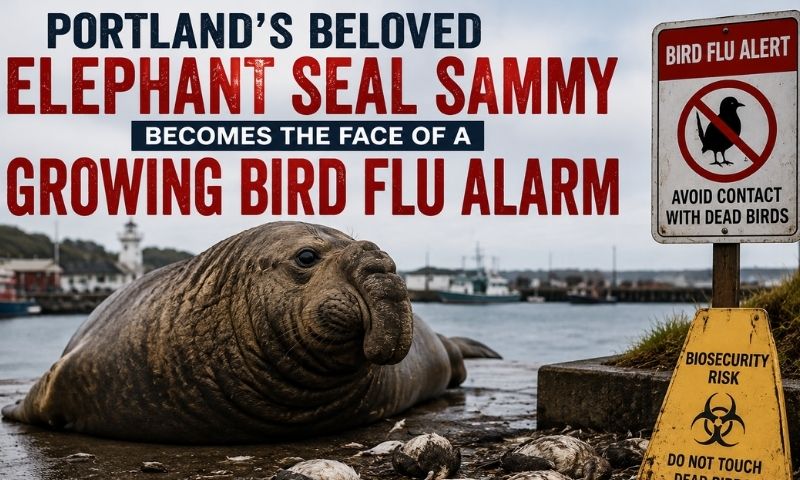
The story is about Sammy, a multi-tonne elephant seal who has spent years lounging on this stretch of coast and has, almost by accident, become southwest Victoria’s most recognisable resident. Locals now watch him the way you’d watch an ageing celebrity: fondly, and with a growing sense of unease.
For seven years, Scott Kempton has hauled boats in and out of Portland’s harbor without much drama. These days his shovel gets more use than his winch. From past three weeks, he has been picking dead seabirds from the slipway, before any tourist could find them.
A Local Icon in the Firing Line
Sammy first turned up in Portland years ago, and the town adopted him the way small coastal places tend to adopt their strays. He’s been photographed asleep on boat ramps, filmed lumbering across car parks, and nicknamed with the kind of affection usually reserved for a dog rather than a wild animal that outweighs a small car. Kempton says he is calmer than his interstate rival, Tasmania’s famous Neil, but no less capable of drawing a crowd.
That fondness is now colliding with fear. Photos shared with local media in recent days show seabirds, suspected to have died from the H5 strain of bird flu, lying within centimeters of the elephant seal’s face on the Portland waterfront.
Weeks of Quiet Clean-up Duty
What began as an informal clean-up has turned into something closer to a roster. Residents are bagging dead birds and disposing of them before he or other wildlife can make contact, a stopgap measure that groups such as the Invasive Species Council say highlights how far ahead of authorities the community has had to move. Its chief executive, Jack Gough, has argued the response needs to match that energy, with faster, safer carcass collection so animals like him aren’t left sleeping metres from infected birds.
South Australia’s Warning Sign
The anxiety here isn’t happening in isolation. Across the border, authorities in SA confirmed the country’s first bird flu death in a marine mammal on the Limestone Coast. A day later, a similarly suspected case emerged at a breeding colony off Kangaroo Island, at a site already hit by a mass bird die-off. Conservation groups warn that if the virus establishes itself among these coastal colonies at scale, the outcome for SA’s wildlife, and for his kind further west, could be catastrophic rather than merely tragic. Federally, the picture is grim too.
Scientists Weigh the Risks Facing His Kind
University of Tasmania Antarctic ecologist Jane Younger, who has worked through outbreaks on South Georgia, says there’s a grim precedent for Australian elephant seal populations if the disease takes hold at scale. She recalled arriving on beaches to find hundreds, sometimes thousands, of remains in a single visit. Globally, the toll among these southern populations has been severe enough that Australia now rates the species at very high risk from the virus.
Younger’s read on Sammy’s situation, though, contains a sliver of comfort. Because he lives largely alone rather than in a breeding colony, he has no other seals nearby to catch the virus from, cutting off the main way it spreads so explosively through packed rookeries overseas. His risk instead comes directly from birds and a contaminated environment, which is exactly why locals emptying his resting spots of carcasses may genuinely be helping.
Community Calls for a Faster Response
Back in Portland, residents want authorities to treat Sammy’s protection as seriously as they’ve treated penguin vaccination programs elsewhere in the state. Wildlife advocate Helen Oakley has counted more than a dozen dead terns near his favorite haul-out spot in a single check and wants guaranteed, regular carcass removal rather than relying on volunteers with shovels.
She’s also asking the public to give the animal room: thirty meters back, dogs leashed, no closing in for a photo. An elephant seal that injures someone risks being euthanized, she notes, which would be a second tragedy layered on the first.
Kempton, for his part, doesn’t expect government to stop birds dying, in Victoria or across the SA border. What he wants is simpler: faster clean-up rounds, and a community that keeps giving Sammy the space, and the clean patch of sand, he needs to ride this out.