
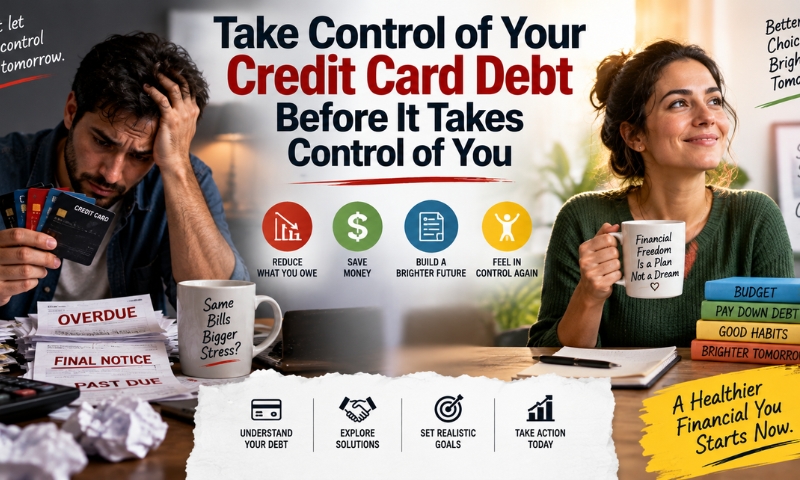
It is nice to have a credit card when you don’t have enough cash to cover bills, but when you still have an unpaid balance on the credit card each month, it can be very costly. As interest charges swell and living expenses continue to be high, many Australians are struggling to make real progress on their repayments.
Fortunately, it is not permanent to have credit card debt. It does not take much to make a difference -a few small changes, the goodwill of the budget makers, and early responses. The trick is to not worry about it after the fact, and to address it before the interest gets too big.
Start by Understanding Where You’re Money Goes
The first step in tackling Credit card debt is to understands your financial position. That sounds obvious, but many people know roughly what they owe without knowing exactly where their money disappears each month.
Go through recent bank and credit card statements. Write down your regular income, essential expenses and discretionary spending. Check subscriptions, take-out meals, online shopping and other small purchases-you can’t tell if they’ll add up.
Financial counsellors advise creating a simple budget prior to approaching a lender. After you’ve determined your income and necessary expenses, you will be able to figure out a repayment amount that you could afford instead of just paying whatever is left over each month.
The Trap of Revolving Credit Card Debt
One of the biggest problems with Credit card debt is that it can become a cycle. You make a repayment, reduce the balance slightly, and then use the card again when another expense appears.
Breaking that cycle may require temporarily stopping new purchases on the card. Some people choose to lower their credit limit, while others put the card away entirely until the balance is under control.
The important thing is to avoid using a credit card as a permanent extension of your income. If everyday expenses repeatedly need to be placed on borrowed money, the underlying budget problem needs attention.
Paying Only the Minimum is an Expensive Habit
Paying the minimum amount may give you some relief in short term, but , its long term effects are more severe. This is because minimum repayments always come with high interest rates. Majority of your payment goes in covering the interest rather than the principal. The National Debt Helpline warns that a debt can take decades to clear when repayments remain at the minimum level.
Even a modest increase can help reduce the amount of interest charged over time. If you receive extra income, such as a bonus or tax refund, consider directing part of it towards Credit card debt rather than immediately spending it.
Check if you’re paying too much for your credit card
There are some differences in Interest rates, annual fees and other charges depending upon the type of card you have. Balance transfer offers can also be enticing especially if they feature a temporary low or zero interest rate. But, please read the conditions carefully. Failure to make your payments or pay off the balance in time may lead to greater expenses.
This is also true for debt consolidation. An advantage of consolidating multiple loans into one is that it makes repayments easier; however, that doesn’t necessarily mean that the debt becomes cheaper to repay. Longer repayment times may result in a greater repayment amount.
Break the Revolving Credit Card Debt Cycle
When the repayments have started, be vigilant enough to look closely at your expenses. Any wasteful expenditure can & will start the revolving credit card debt. Try to use cash more often, to track the money being spent. This creates a clearer boundary between money you actually have and money you are borrowing. Building a small emergency fund can also help. Even a modest savings buffer may prevent unexpected expenses from immediately going back onto the card.
When to Contact the National Debt Helpline
If the situation feels too difficult to manage alone, free financial counseling is available through the National Debt Helpline. The service provides independent and confidential assistance for people dealing with financial pressure and debt problems.
The NDH can help people understand their options, assess their financial position and communicate with creditors. Financial counselors care less about the reasons why someone is in debt, they just want their money back on time.